

Working with Presence
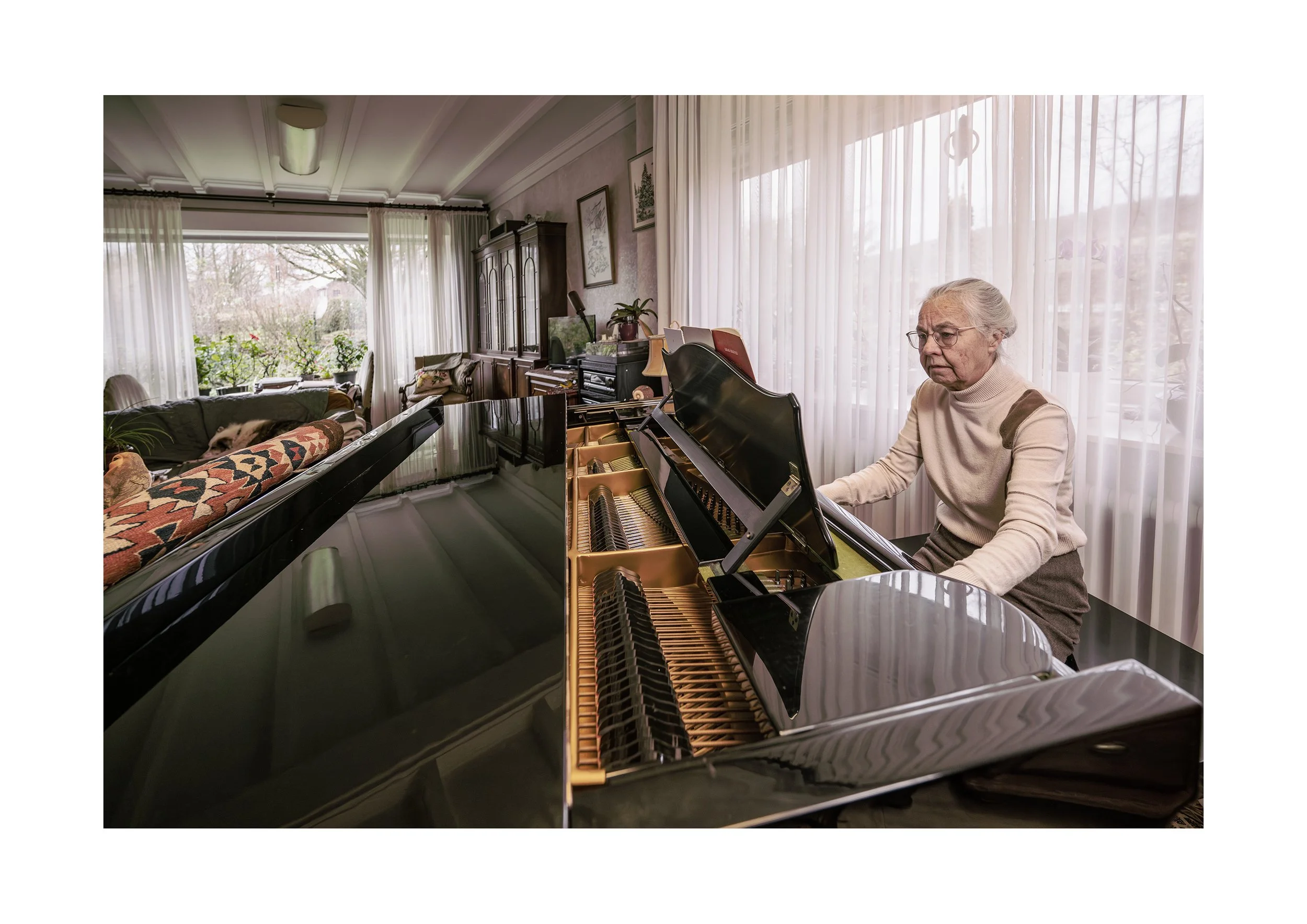
I rarely start with the idea of making a beautiful photograph.
For me, photography begins earlier than the moment I raise the camera. It begins with looking, waiting, sensing what a place or a person is already carrying. I am interested in the quiet tension between someone and their surroundings, between light and material, between what is visible and what remains just outside the frame.
For a long time, photography was a way for me to step away from people. In my daily work, human contact is constant and often intense. Taking a camera outside gave me another kind of attention: walking, observing, reading light, following structures, without having to respond immediately. It was a way of being present without interfering too much.
Over time, that changed. Or perhaps I simply began to understand my own way of photographing more clearly.
When I photograph people, I do not look for a pose first. I look for contact. Not in a loud or theatrical way, but through a shared moment of attention. I want to know how someone is, what matters in that moment, what kind of space we are entering together. Only then does the photograph begin to take shape.
The same is true when I photograph places. A street, a room, a cemetery, a coastline, a window or a structure is never neutral to me. Places hold traces. They carry use, memory, absence, rhythm, light, decay, order and interruption. I am drawn to those moments where a place seems to reveal something without explaining itself.
Light is central in this. Not simply as a technical condition, but as a way of shaping meaning. Light can make a body appear almost like a landscape. It can turn a room into a memory. It can separate a figure from the world, or absorb that figure back into it. It can make something ordinary feel charged, fragile or temporary.
I often photograph in the space between control and discovery. In the studio, I may build the light carefully. Outside, I often wait until the situation starts to arrange itself. In both cases, I am looking for the same thing: a moment in which presence becomes visible.
That presence does not always have to be human. Sometimes it is a person in a room. Sometimes it is a body in shadow. Sometimes it is a passer-by caught between architectural structures. Sometimes it is only a place where someone has been, or where something has happened, or where time has left a trace.
I am not interested in isolating subjects from their context. Context is often the subject.
A portrait is not only a face.
A landscape is not only a view.
A structure is not only a form.
A shadow is not only darkness.
Each of these things can show how we relate to the world around us, and how that world leaves marks on us.
My photographs are attempts to make those relationships visible. Between people and places. Between light and matter. Between presence and absence. Between what we see and what we sense before we can name it.
I do not try to explain everything in the image. I prefer photographs that leave some room for the viewer to enter. The image should not close too quickly. It should hold a question, a silence, a tension, or a trace.
Perhaps that is what I am looking for most: not the perfect photograph, but the moment where something becomes present enough to be seen.
