

From Template to Truth
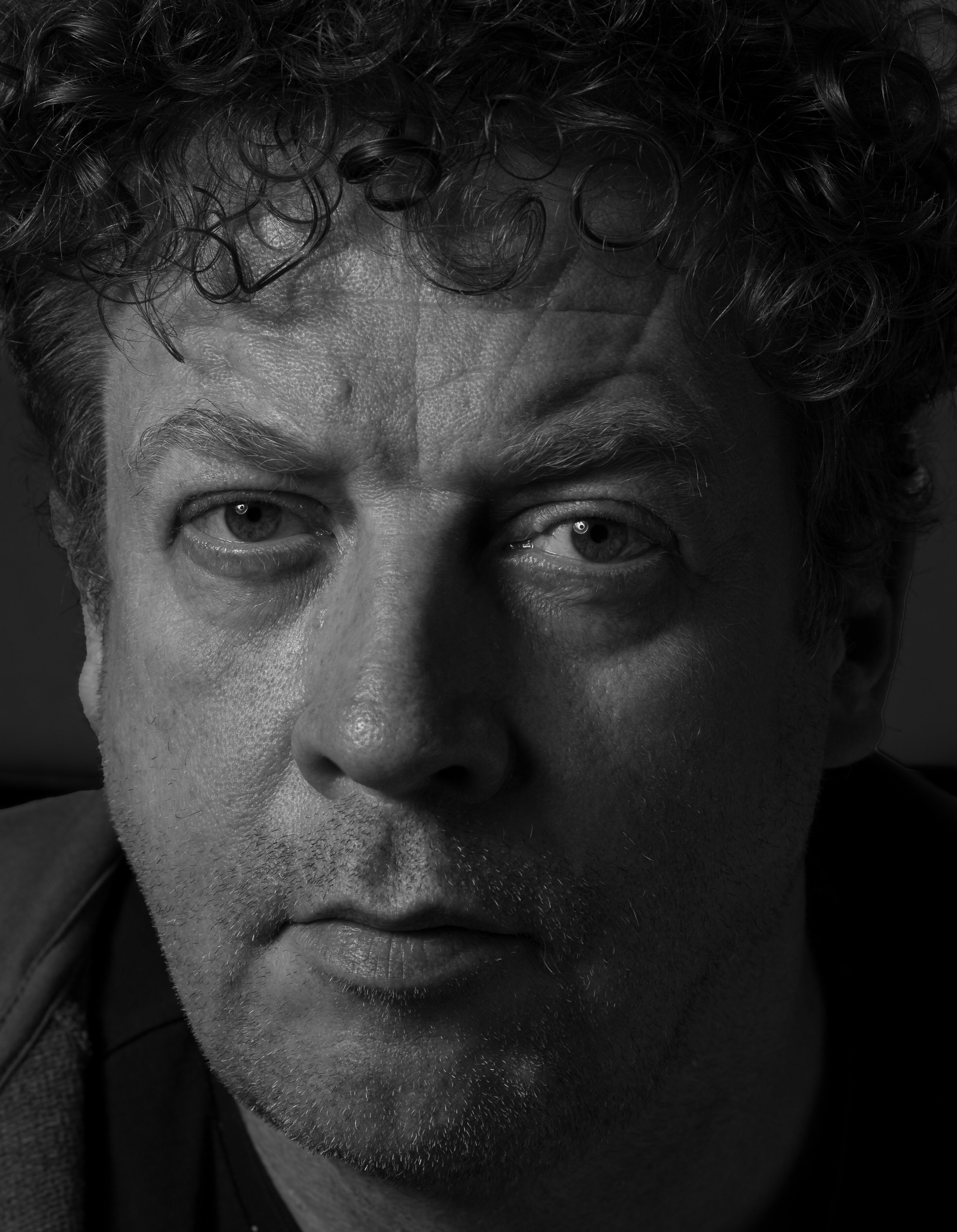
A photographer rebuilds his website and accidentally explains why.
There is a particular kind of embarrassment that comes with realising your website has fake testimonials. Not testimonials you faked, mind you. Testimonials that came with the template. Emily Johnson, Michael Stevens, and Sarah Thompson are all delighted with work I never did for them, praising a version of me that doesn't exist. If you visited kerstenphoto.com in the past year, you may have met these people. I apologise on their behalf.
The truth is, I bought a template, dropped in some images, and hoped the rest would sort itself out. It didn't. The site spoke in "we" while there was only one of me. It offered wedding photography and pet portraits alongside the work I actually care about. It had placeholder images from the template developer still loading in the portfolio. It was, to put it charitably, a mess wearing a suit.
So I burned it down. Not literally, though the thought occurred to me.
This site, rainerkersten.com, is the result. Built from the ground up, structured around how I actually work rather than what a template thought I should be selling.
But let me back up.
I came to photography the way most people do, slowly and then all at once. For years, it was a hobby, something I did alongside a career in social work and counselling. I photographed sports, then nature, then anything that held still long enough. The usual trajectory. The camera was a companion, not a calling. I had the technical baggage, the hours behind the viewfinder, the muscle memory. What I didn't have was a reason to look differently.
Before the academy, there was another kind of looking. For several years, I served as alderman in the municipality of Vaals, responsible for housing, traffic, and everything that falls under spatial planning, which turned out to be almost everything. Landscapes, monuments, cemeteries, the way a village shapes itself around its history and is shaped by it in return. I learned to read a place not just for what it shows but for what it has absorbed. I already carried my camera everywhere, to site visits, to special places across the country, to meetings where no one expected a photographer. I was not yet a photographer in any meaningful sense, but I was already looking like one. I just didn't know it.
One of the things I did was oversee the renovation of an old cemetery, clearing away what had accumulated so that the earliest graves became visible again. Years later, I would return to that same cemetery as a photography student to build my light encyclopedia. The irony is not lost on me. I spent years in public office making things visible that had been covered up. Now I do the same thing with a camera. The method changed. The instinct didn't.
But instinct is not the same as understanding. For that, I needed Carlo Valkenborgh. Carlo had been the photography teacher at the Stedelijke Academie voor Schone Kunsten in Hasselt for years, a man with seemingly endless experience as both photographer and educator, and a master of the darkroom. People came to the academy specifically for him. By the time I was considering enrolling, he had stepped down. But in the conversations we had in the run-up to my first year, he made the case I needed to hear: start from the basics. Not because you lack skill, but because the basics will make you see differently. He was right. That decision to begin again, to set aside what I already knew and rebuild from the ground up, is what allowed me to break through the glass ceilings I didn't know I was standing under. Carlo still drops by the academy from time to time. I suspect he always will.
In the first year, Sanne Weckx had taken over Carlo's role. A painter as much as a photographer, she moved between disciplines freely and without apology. In the studio, she taught us to see how light reveals structure. We worked with continuous light and simple objects. Wood first, then stone, then fabrics, then curves shaped from grey paper placed on grey backgrounds. No colour to lean on, no contrast to hide behind. Just light creating depth where the eye expected flatness. It was disciplined, almost scientific work, and it taught me something I did not fully understand until much later: that light does not illuminate a form, it creates it. Alongside this, we began building a light encyclopedia, a year-long assignment that would map everything light can do to a surface.
Then Sanne had to step back. It was her first year as lead teacher, following in Carlo's considerable footsteps, and the weight of it caught up with her. I felt for her at the time, and still do. But if I am honest, what followed shaped me in ways I cannot separate from who I am as a photographer now. Whether Sanne staying would have led me to the same place, I will never entirely know. What I do know is that her departure opened a door I had not expected.
Aylene Lievens arrived to fill in. She was supposed to stay briefly, but she stayed the rest of the year. An analogue photographer whose work searches for the metaphorical in the ordinary, building layered realities that seem to exist outside of time. She picked up the light encyclopedia where Sanne left off, and took us into the darkroom. Cyanotypes, photograms, full analogue shooting and the complete darkroom process, from exposure to print. No screens, no shortcuts. Just chemistry, light, and the patience to let an image reveal itself in a tray of developer. It was an intensity that later classes never quite got.
It was also her assignment that first put me in a studio with a model, photographing Mira under controlled light. Looking back, the line is unbroken. Grey paper curves on grey backgrounds. A body curved under a strip light on black. The subject changed. The question stayed the same: what does light do to form?
In the second year, Bert Daenen took over. An artist who keeps his commercial practice and his art deliberately separate, who treats light not as a technical tool but as a sculpting medium, and whose portraiture taught me that you can photograph a person honestly without exposing them.
Four people, each a link in the same chain. From Carlo, I got the courage to start over. From Sanne, I learned that light creates form. From Aylene, I learned to trust what light does when you give it time. From Bert, I learned to see it and to build with it.
What I found, or what found me, is patience. I don't chase images. I wait for them. I choose a position, I read the space, I let things happen. Whether I am standing at a street corner in Aachen watching people move through geometry, or sitting in a living room in the Heuvelland while a piano teacher plays something she learned before I was born, or building light around a body in a studio, the approach is the same. Position, patience, presence.
This site is organised around that idea. Not by genre, because genres are for camera shops. Instead, I've structured my work into three ways of looking:
The World Outside, where I observe the street, the city, the places I travel through with the same eye I bring to my own neighbourhood. The People Close By, where I photograph the people in my life, in their spaces, as temporary presences in rooms that will outlast them.
Sculpted in Light, where I build the light myself, shaping bodies and forms into landscapes of skin and shadow.
Three sections, one method. The rest is just geography and subject matter.
I live in the three-border region where the Netherlands, Germany, and Belgium meet, near Aachen. I study in Hasselt under Bert Daenen, whose own practice taught me that you can be a working photographer and an artist at the same time, as long as you are honest about which hat you are wearing.
This site is the honest version. No, Emily Johnson. No "we." No pet portraits.
Just the work, and the person behind it.
